


Why Do Men Plateau After 30?
If you’re a man over 30 and your progress has stalled, strength flat, body fat creeping up, recovery slower, you’ve probably thought:
“It’s my testosterone.”
It isn’t.
Yes, testosterone declines slightly with age, around 1% per year after your early 30s. That small drop does not explain:
-
8–10kg of extra body fat
-
Chronic fatigue
-
Stalled lifts
-
Poor recovery
-
Loss of muscle definition
What changes after 30 isn’t your biology first.
It’s your behaviour.
The Real Reasons Men Plateau After 30
1. You’re Training Hard, Not Progressively
In your 20s, you could get away with randomness.
Now you can’t.
If you’re not:
-
Tracking progressive overload
-
Programming strength phases
-
Managing fatigue
-
Scheduling deloads
-
Training with intent
You’re maintaining, not building.
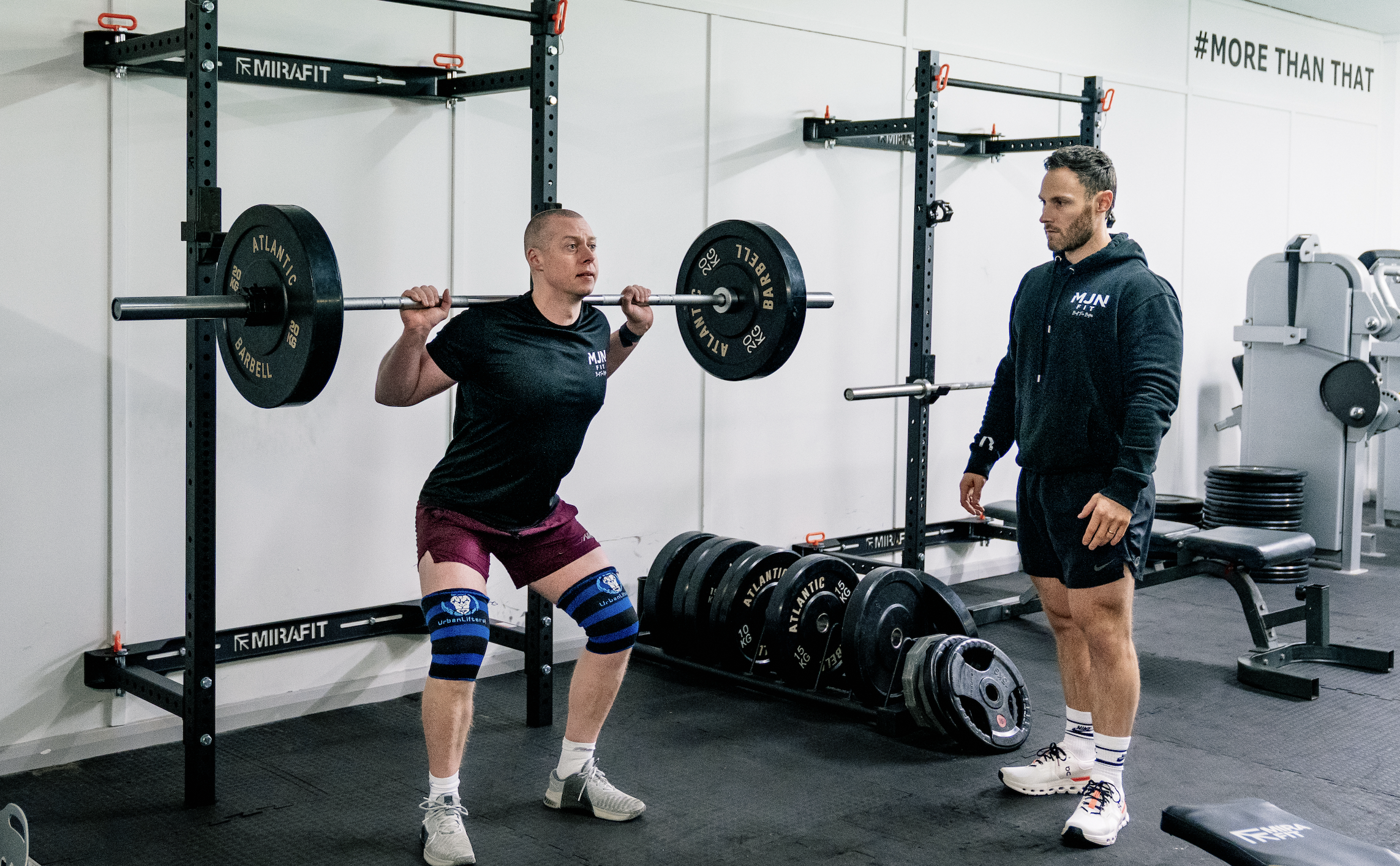
Strength training after 30 must be structured.
The margin for error shrinks.
Precision matters more.
2. Recovery Is the Missing Variable
Muscle growth doesn’t happen in the gym. It happens when you recover.
Common issues I see with men over 30:
-
5–6 hours of sleep
-
Late-night screens
-
High work stress
-
Too much caffeine
-
Not enough protein
That combination kills progress.
If your nervous system is constantly wired, your body isn’t in a growth state.
Recovery isn’t soft.
Its performance.
3. “Busy” Has Replaced Disciplined
Career expands.
Family responsibilities increase.
Time feels tighter.
So structure disappears.
Meals become reactive.
Training becomes inconsistent.
Standards drop slightly, but consistently.
You don’t need more motivation.
You need systems.
High performers don’t wing their business.
Stop winging your body.
4. You Stopped Training Like an Athlete
Many men over 30 drift into:
-
Medium weights
-
Moderate effort
-
No performance targets
-
Same workouts every week
The body adapts to demand.
If demand is average, results are average.
To build muscle after 30, you still need:
-
Heavy compound lifts
-
Progressive overload
-
Clear performance markers
-
Intentional intensity
Age isn’t the limiter.
Lack of stimulus is.
How to Build Muscle and Strength After 30
If you want results in your 30s and 40s, you need structure in four areas.
1. Strength-Led Programming
Keep the fundamentals:
-
Squat pattern
-
Hinge pattern
-
Horizontal and vertical pressing
-
Pulling volume
Performance drives aesthetics.
Track numbers. Progress them.
2. Measured Nutrition (Not Guesswork)
For men over 30 trying to gain muscle or lose fat:
-
Anchor protein daily
-
Set calories based on goal
-
Run structured deficit phases
-
Built-in maintenance phases
-
Avoid endless cutting cycles
Muscle gain after 30 requires consistency — not extremes.
3. Prioritise Recovery
Treat sleep like a non-negotiable.
-
7–8 hours minimum
-
Limit late-night screens
-
Manage caffeine
-
Schedule deload weeks
-
Keep steps consistent
You can’t out-train poor recovery.
4. Upgrade Your Identity
This is the real shift.
You stop acting like someone who “used to train.”
You become someone who trains.
Not emotionally.
Not when convenient.
But as part of who you are.
When identity changes, consistency follows.
The Truth About Fitness After 30
Most men haven’t hit a biological ceiling.
They’ve lowered their standards.
When structure returns, progress returns.
Every time.
Your 30s can be your strongest decade if you train with intent.
Ready to Stop Plateauing?
If you’re a high-performing man over 30 who wants:
-
Strength that improves year on year
-
Body fat under control
-
Energy that matches your ambition
-
A physique that reflects your standards
Then stop blaming testosterone.
Build structure.
If you want help building that structure, apply for coaching with MJNFit.
We don’t guess.
We build.